
Sharp-Edge vs Rounded Dice: Which Should You Choose?
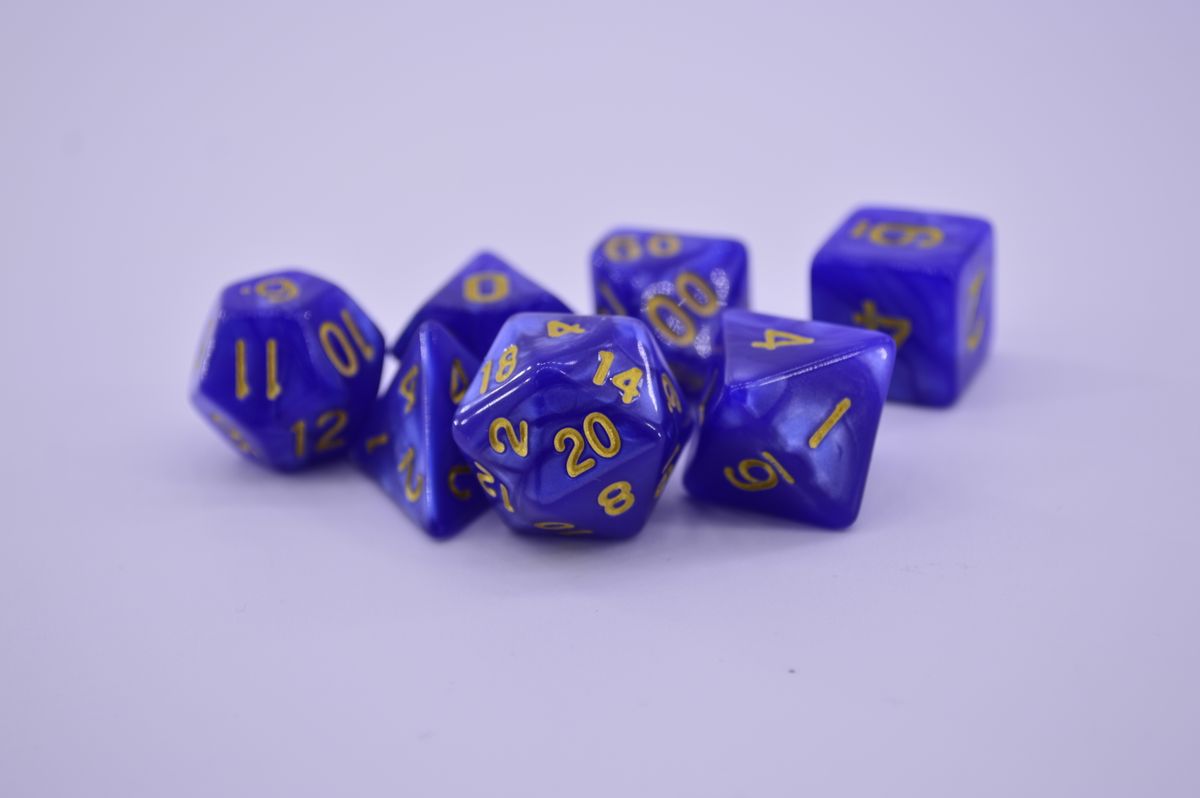
One of the first choices in a custom dice project is edge style: crisp, faceted sharp-edge dice or the familiar rounded corners of standard dice. Both are popular, but they differ in look, feel, fairness, and cost. This guide breaks down the trade-offs.
Sharp-edge dice
Sharp-edge dice have crisp, precise corners and perfectly flat faces, giving a jewel-like, geometric look that shows off translucent resins and inclusions beautifully. Because the faces are flat and the geometry is exact, well-made sharp-edge dice are often prized for balance. They are typically cast individually in open molds, hand-finished, and polished — a slower, more labor-intensive process that raises the price.
Rounded-edge (standard) dice
Rounded dice have softened corners and edges. They roll and tumble more readily, feel familiar in the hand, and are the standard for mass-market and gaming use. Rounded dice are usually produced in closed molds at higher volume, which makes them faster and cheaper to manufacture, especially at scale.
Which should you choose?
- Choose sharp-edge for collector sets, premium retail, and showcasing translucent or inclusion designs
- Choose rounded for gaming, board-game components, large runs, and tighter budgets
- Sharp-edge tends to cost more per set and may have a longer lead time due to hand-finishing
- Rounded scales better to high volume with lower unit cost
- Both can be made in resin, acrylic, and metal — edge style is independent of material
A note on fairness
Edge style alone doesn’t determine fairness — balance comes from consistent density and accurate geometry. A precisely made sharp-edge die and a quality rounded die can both roll fairly. What matters most is tooling accuracy and quality control, not the corners.
Frequently asked questions
Are sharp-edge dice more fair than rounded dice?
Not inherently. Fairness comes from consistent density and accurate geometry. Both sharp-edge and rounded dice can roll fairly when made with accurate tooling and good quality control.
Why do sharp-edge dice cost more?
Sharp-edge dice are usually cast individually and hand-finished and polished to keep their crisp corners, which is more labor-intensive than the higher-volume molding used for rounded dice.
Can metal dice be sharp-edge?
Yes. Edge style is independent of material — resin, acrylic, and metal dice can all be produced in sharp-edge or rounded styles.
Have a custom dice project?
Send us your spec sheet — we'll reply with a detailed quote within 24 hours.
Get a Free Quote